Polaroid vs Instax for Weddings - Which Is Better for Guestbooks?
Let’s just quickly clear something up before we get started: most people say “Polaroid” when they really just mean “instant camera”. Fair enough - same way people say Hoover when they mean vacuum. But if you’re choosing one for a wedding guestbook, Polaroid and Instax are not the same thing, and the differences matter once real money and real wedding guests get involved.
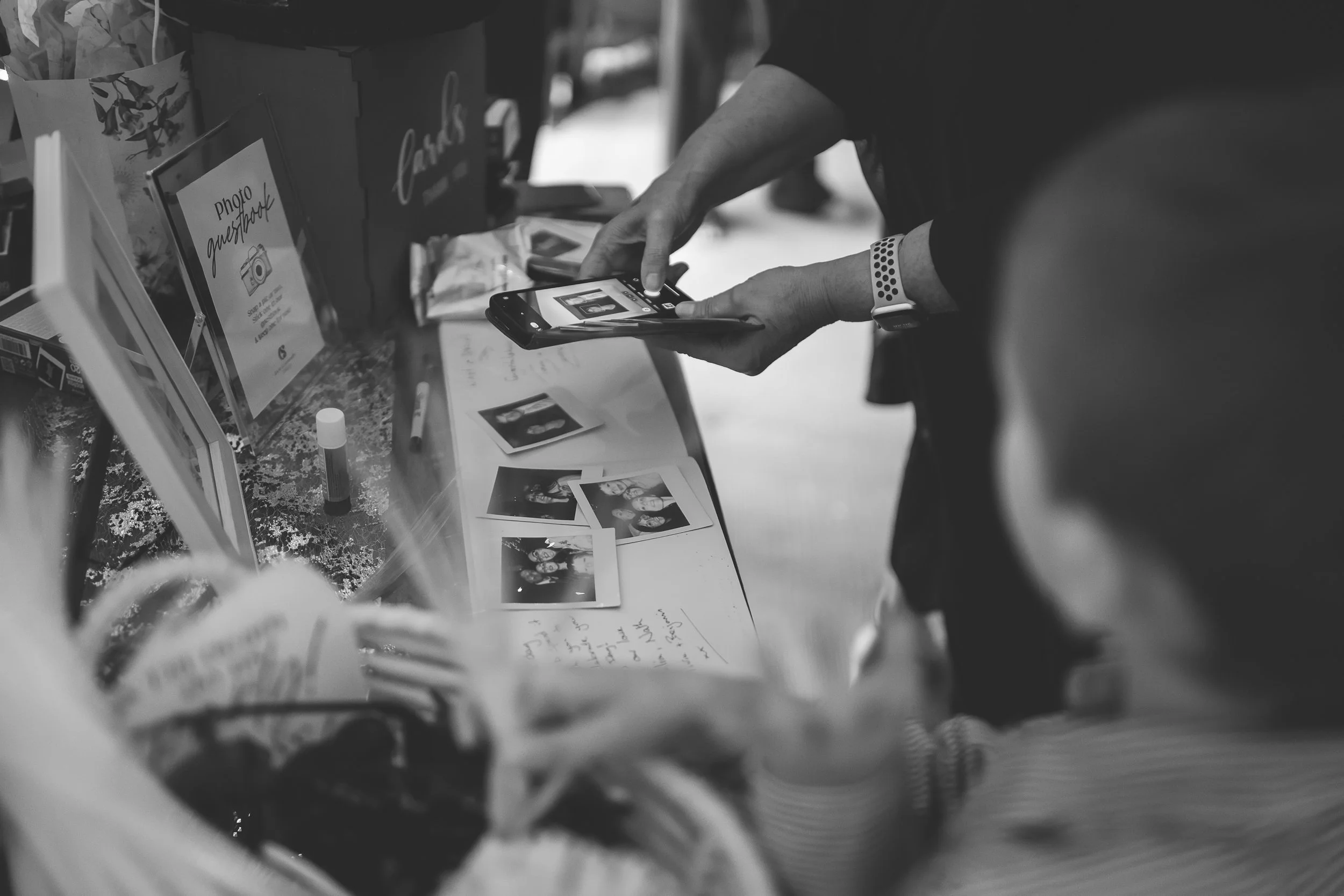
If you want the short answer, here it is: for most weddings, Instax is the better choice. Not because Polaroid isn’t cool - it absolutely is - but because Instax is cheaper to run, quicker to develop, and generally more practical when you want guests to pick it up and use it without drama.
The biggest difference is cost. Fujifilm’s official UK pricing currently puts Instax Mini film at £14.99 for 20 shots and Instax Square film at £16.99 for 20 shots. That works out at about 75p per Mini print and 85p per Square print. Polaroid Colour i-Type film is currently £16.99 for just 8 shots, which works out at about £2.12 PER PHOTO. So on film alone, Polaroid is roughly 2.8 times the cost of Instax Mini and 2.5 times the cost of Instax Square per photo. That’s not a tiny difference - that’s the sort of difference that changes whether guests can relax and enjoy it or whether every button press feels faintly criminal.
It gets even more obvious when you scale it up to wedding numbers. Using current official prices, an Instax Mini 41 plus 100 shots comes to £169.94, while an Instax SQ1 plus 100 shots comes to £204.94. A Polaroid Now Gen 3 is currently £119.99, and because Polaroid film comes in 8-shot packs, getting to roughly the same territory means buying 13 packs for 104 shots - a total of £340.86. So if you’re comparing like-for-like guestbook use, Polaroid gets expensive very quickly.
Then there’s speed. Instax film develops in about 90 seconds, while Polaroid says its i-Type film takes around 10 - 15 minutes. That might sound like a minor detail, but at a wedding it’s actually pretty significant. Faster development means guests can see the print, stick it in the book and move on. Slower development means more standing around, more confusion, and more opportunities for the photo to end up abandoned on a table next to a half-finished espresso martini.
Probably the biggest gotcha that people overlook though is the battery. Fujifilm thoughtfully have their Instax cameras replaceable batteries. Most of the mini series (including the Mini 41) take standard AA batteries. The SQ1 is a bit more niche with two CR2 cells, but at least they’re changeable and they supposedly last up to 300 shots. Meanwhile, modern Polaroids have rechargeable batteries and the Go only manages around 120 before it gets tired and calls it a night. When you factor in that battery life is a lot like car MPG’s (and that guests have a tendency to leave cameras on between photos), that leaves you with the very real possibility that your super-cool retro Polaroid might well need re-charging part way through the night. Fine for smaller weddings, but for a full day, this is a serious gamble.
In terms of look, Polaroid does still have a case. Its classic i-Type film gives you a larger image area of 79 x 77 mm, which is much more generous than Instax Square at 62 x 62 mm and Instax Mini at 46 x 62 mm. So if your top priority is that unmistakable larger-format Polaroid aesthetic, fair enough - it does have its own charm. But if your priority is getting consistent, easy guestbook photos without spending a fortune, and without running the risk of your camera needing a power-nap whilst on the job, Instax is without contest, the more sensible pick.
So which one is better for weddings? Instax wins for most people. It’s cheaper, develops faster, and makes far more sense for guestbooks and all-evening reliability. Polaroid still wins on iconic branding and larger print size, so there’ll always be couples who fall for the look - completely understandable, to be honest. But if you want the practical answer rather than the romantic one, Instax is usually the better wedding and event camera. Annoyingly sensible, but there we are.